
Yasmina Benslimane
Pronouns: She/Her
Organisation: Politics4Her
Country of origin: Morocco
Profile
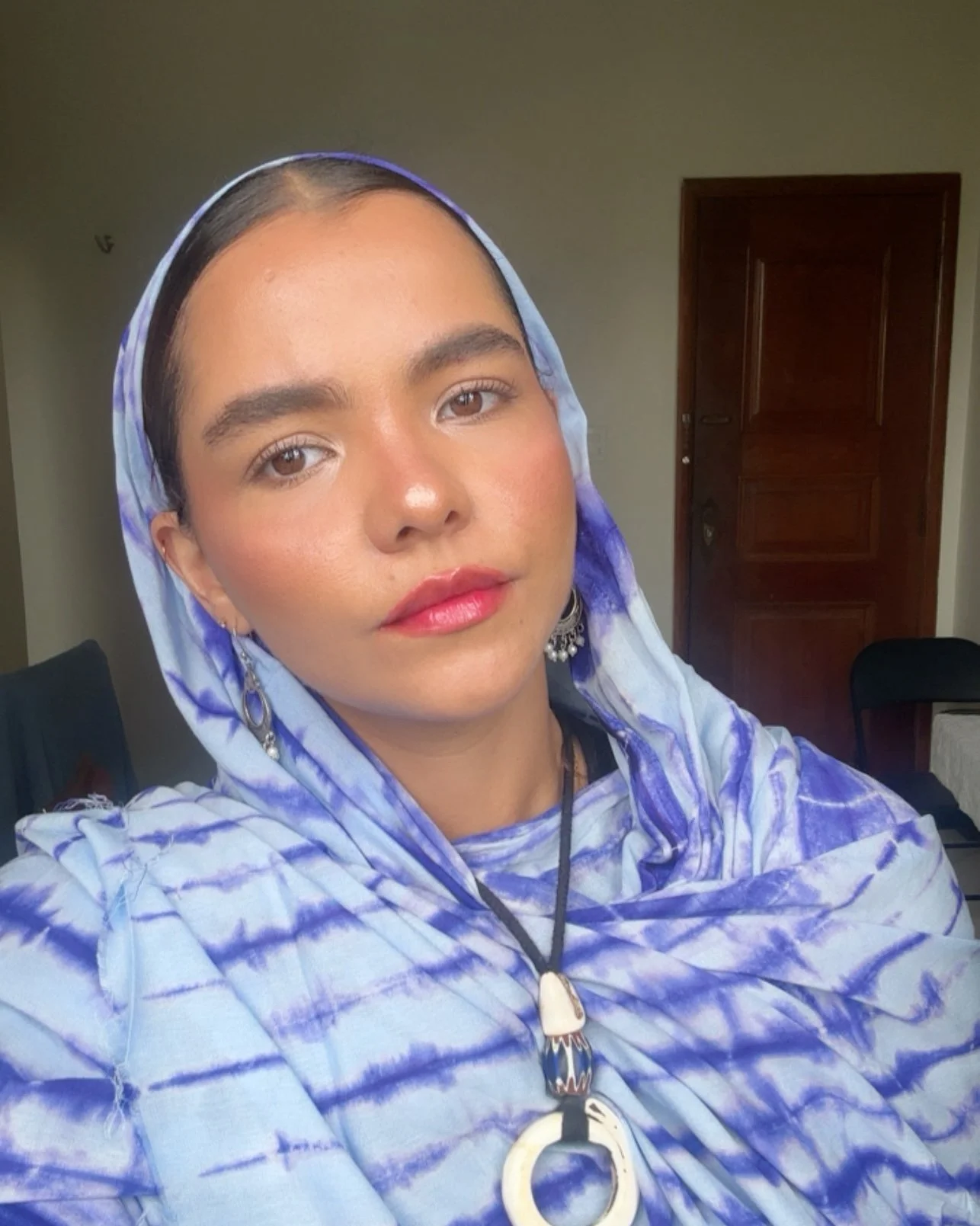
Yasmina Benslimane is a Moroccan activist and the founder of Politics4Her, a blog platform and global movement encouraging the active participation of women and girls in politics, leadership and civil society. She studied Political Science and Communications in Madrid and earned a Master’s degree in International Law and the Settlement of Disputes at the UN’s University for Peace in Costa Rica. Because Yasmina has lived in many countries and speaks multiple languages, she sees herself as a world citizen. The combination of her studies and experience living abroad contributed to a growing interest in peacebuilding. At university, Yasmina realised that what was being taught was male dominated, leading her to believe that women should be much more involved in decision-making and politics in order to create a more equal and peaceful world. So, she founded Politics4Her, an organisation that covers a wide range of topics, from gender issues to international security, always through an intersectional and youth-focused lens. Yasmina said their mission is to ‘provide women with this space to break the stereotypes and grow more informed and learn about politics and international relations.’
Story
According to Yasmina Benslimane, ‘Women are the way to peace, and if we have more gender mainstreaming policies, if women are involved in peacebuilding processes and negotiations, then it is more likely to last.’ She said this sentiment guides Politics4Her and all the work that Yasmina does, especially in encouraging women and girls to become active participants in leadership and peacebuilding. She said that the fifty young women who are part of the team write articles, share news, show profiles of inspiring women from their regions, create interactive quizzes and review books and movies through a feminist lens. She said Politics4Her takes a global South approach, with the intention of ‘decolonis[ing] not only mainstream media, but leadership positions as well’, emphasising intersectionality and inclusion.
Yasmina said that various social and cultural factors in Morocco and a deeply rooted patriarchal mindset lead hate and sexist commentary towards Politics4Her. She said these misogynistic mentalities used to have a deep personal impact on her and she would feel anxious after absorbing the negative energy in the comments. Now, she does not take it as personally because ten years of experience has taught her that the issue lies with them, not her. Yasmina now focuses her energy only on people who are open to dialogue and changing their minds, or on working together with those who already share the same beliefs. She said the book We Should All Be Feminists by Chimamanda Ngozi Adichie helped her realise how women are often taught to view each other as competitors instead of sisters. She attributes this hatred as rooted in the patriarchy, a result of society’s structure.
Another obstacle Yasmina said she faces is the lack of investment in young people. She believes that much inclusion of youth is tokenism, used to say, ‘we involved young people’, without giving real attention to intersectionality and minorities. Having worked with a range of corporations and large organisations, Yasmina said she is left with the impression that no one truly cares about young people and that those in power often want to exploit the youth. She said she now views the UN with contempt because she feels that they do not take young people seriously. During her time working with them, she felt her voice was silenced, and it was difficult to contribute to change. The one positive experience she had was with the UNHCR, when she was able to be in the field, working face to face with people. Otherwise, she said she felt stifled by the UN’s ‘neutral way of thinking, where you don’t want to get any country mad, where you’re not allowed to have your own opinion.’
However, Yasmina remains optimistic and hopeful. She said she believes that ‘real change can only happen if you’re outside of the system.’ According to Yasmina, this change will come from young people – young people who know their rights, who can tell right from wrong people – young people who care. Yasmina said that change is ‘going to come from us being mad, from screaming, from shouting. We are the force. They are not.’